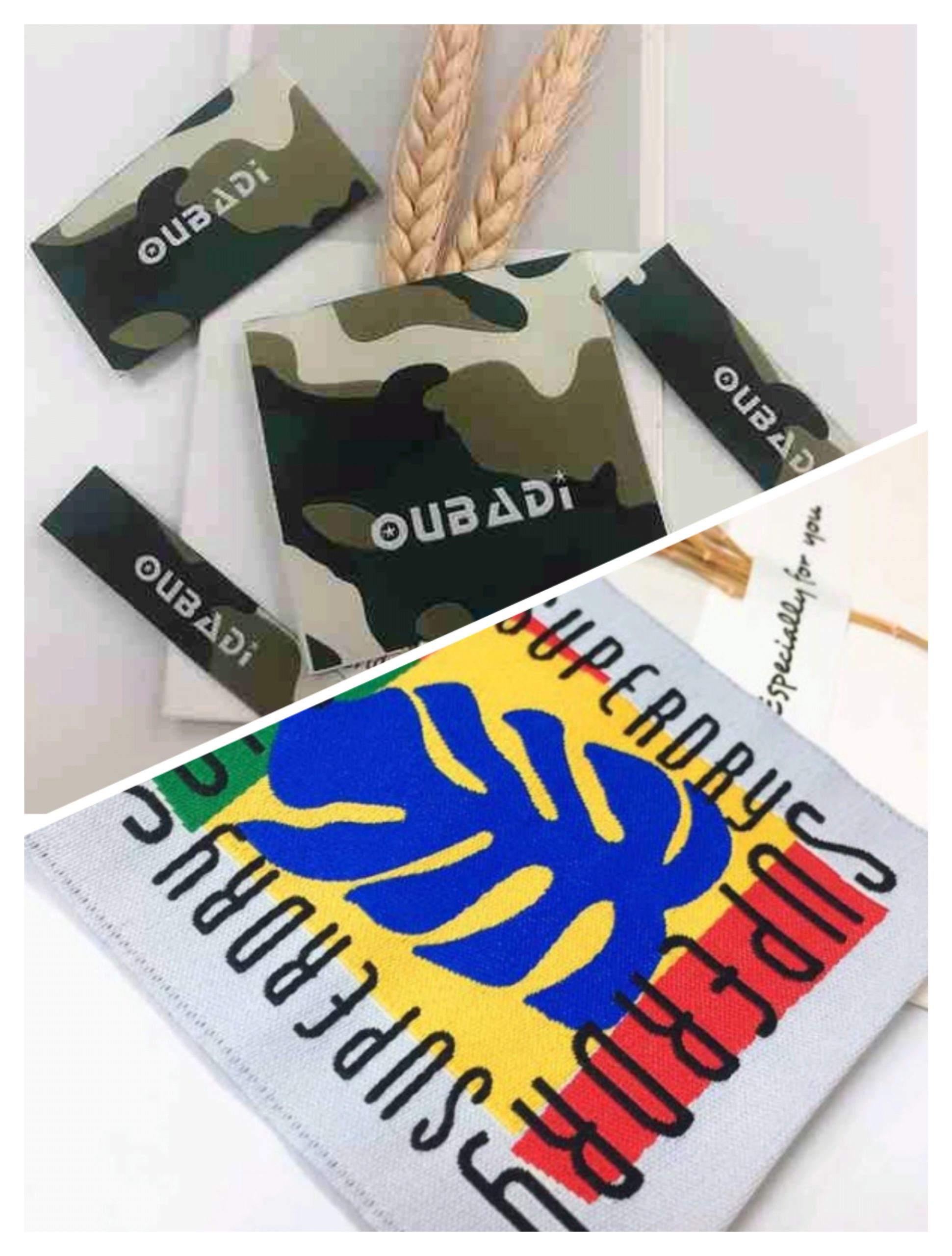
Multi – dimensional Analysis of Woven Labels and Print Labels
In the garment industry, woven labels and print labels are more than just simple identifiers; they are complex elements influenced by various factors, from production techniques to market demands.
Production Processes: A Tale of Complexity and Simplicity
The creation of woven labels is a meticulous process. It involves the interweaving of warp and weft threads to form text, logos, or patterns on fabric tapes. Skilled artisans or advanced machinery carefully control the threading to ensure the accuracy of the design. This method allows for high – precision, multi – colored designs with a three – dimensional feel. However, the complexity of the process leads to higher production costs and longer lead times.
In contrast, print labels are produced through printing technologies. Techniques like screen printing, digital printing, and heat transfer are commonly used. Screen printing, for example, is cost – effective for large – scale production, while digital printing offers the flexibility to print high – resolution, detailed images. The simplicity of these processes enables quick production, making print labels a more affordable and faster option.
Sustainability: A Growing Concern
With the increasing global focus on environmental protection, the sustainability of label production has become crucial. For woven labels, the choice of materials matters. Some manufacturers are now using recycled or organic yarns to reduce their environmental impact. Additionally, the energy – intensive nature of the weaving process can be mitigated by using energy – efficient machinery.
Print labels also have their sustainable alternatives. Water – based inks are being increasingly used in printing to reduce the release of harmful chemicals. Moreover, the use of recycled paper or biodegradable films as label substrates helps minimize waste. Brands are starting to prioritize these eco – friendly options not only to meet consumer expectations but also to contribute to a greener planet.
Design Trends and Innovations
In recent years, label design has evolved significantly. For woven labels, minimalist designs are in vogue, with simple yet elegant brand logos taking center stage. At the same time, there is a resurgence of interest in vintage – style woven labels, adding a touch of nostalgia to modern clothing. Innovations include the use of metallic threads or glow – in – the – dark materials to create unique visual effects.
Print labels, on the other hand, are embracing the digital age. Augmented reality (AR) and QR code – enabled labels are becoming more common. These interactive labels allow consumers to access additional product information, such as care instructions, fabric details, or even virtual try – ons. The ability to print highly detailed and creative designs also makes print labels a favorite for brands looking to stand out with eye – catching visuals.
Market Competition: A Battle of Differentiation
The market for woven and print labels is highly competitive. Large – scale label manufacturers often have the advantage of economies of scale. They can produce labels in high volumes at lower costs, making them attractive to major fast – fashion chains. These manufacturers invest in advanced equipment and technology to streamline production processes.
Small – and medium – sized enterprises, however, differentiate themselves through customization. They offer personalized services, working closely with clients to create unique label designs. This is particularly appealing to niche fashion brands or those with a strong focus on individuality. Additionally, some suppliers are positioning themselves as sustainable label providers, targeting brands that prioritize environmental responsibility.
In conclusion, woven labels and print labels are shaped by a complex interplay of production processes, sustainability concerns, design trends, and market competition. As the garment industry continues to evolve, these labels will adapt to meet the changing needs of brands and consumers alike.